Why Smart People Still Make Bad Decisions | Brenxa – Brenxa
Why Most Smart People Still Make Bad Decisions
Intelligence alone does not prevent bad decisions. The best decision-makers rely on a different way of thinking, and it changes the outcomes they get.
Chris Awoke · 30 July 2026 · 9-minute read
The meeting that changed how I think about decisions
Three years ago, I sat across from someone who had just made a decision that cost him two years and almost everything he had built.
He was not careless. He was not reckless. By any reasonable measure, he was one of the sharpest people I had met. Sharp enough to build a real business from nothing. Sharp enough to see opportunities other people missed.
And he still made a catastrophically bad decision.
When I asked him what happened, he said something I have never forgotten.
"I knew everything I needed to know. I just didn't think it through properly."
That sentence stayed with me because it explains far more bad decisions than most people realise.
The biggest mistakes I have seen intelligent people make rarely come from a lack of intelligence or information. More often, they come from failing to think a decision all the way through before committing.
I know that because I have done the same thing.
In 2021, I decided to invest significant time and resources into a new product line for one of my businesses. I was confident. I had run the numbers several times, and every version pointed to the same conclusion.
So I launched it.
It failed.
And it was not that my analysis was wrong, but because I had never seriously asked one simple question:
What if the market simply does not want this, no matter how good it is?
That question was missing from my thinking. And because it was missing, I never looked for the evidence that would have challenged my assumptions.
Written by
Chris Awoke
Chris Awoke is the founder and CEO of Wikrena Limited, a data education and AI company that builds the skills and systems African professionals and organisations need to make better decisions. Brenxa is his personal project, built to help founders, investors, and executives think through their most important decisions with the structured rigour of the world's best thinkers.
We tend to assume that smarter people make better decisions. The research says otherwise.
Studies in behavioural economics, the work of Daniel Kahneman, Amos Tversky, and dozens of researchers who followed them, consistently show that intelligence does not protect you from the cognitive biases that cause bad decisions. If anything, smarter people are sometimes more vulnerable because they are better at constructing convincing justifications for conclusions they have already emotionally reached.
The confirmation bias does not care how educated you are. The sunk cost fallacy does not exempt you because you went to business school. Overconfidence, the tendency to believe your own analysis more than the evidence warrants, is actually more common among high performers than among people who have failed enough times to develop appropriate humility.
This is not a comfortable thing to say. But it is true. And understanding it is the starting point for actually becoming a better decision-maker.
Most people, including very smart ones, are significantly worse at making decisions than they believe they are. The gap between perceived decision quality and actual decision quality is one of the most consistent findings in behavioural research. Accepting that gap, rather than explaining it away, is where improvement begins.
What separates great decision-makers from the rest
If intelligence alone does not explain great decision-making, what does?
After years of studying how the world's best founders, investors, and leaders approach their most important choices, the pattern that keeps appearing is this: they have better thinking infrastructure.
They ask different questions. They actively look for evidence that challenges their conclusions instead of confirming them. They think about second-order effects instead of stopping at immediate outcomes. They invite perspectives that disagree with their own rather than surrounding themselves with agreement.
And crucially, they separate the quality of their thinking from the outcome of the decision. They know that a good process can still produce a bad outcome, and that a bad process can occasionally produce a good outcome by luck.
The specific mistakes most decisions suffer from
Before talking about what good decision-making looks like, it is worth naming what bad decision-making actually looks like. Because most of us do not recognize it in ourselves even when we are doing it.
Deciding with one perspective
The most common and most damaging mistake is applying only one analytical lens to a problem. Your lens. The way you naturally see things based on your experience, your incentives, and your existing beliefs.
This feels thorough because you are thinking about it seriously.
A question that looks like an obvious yes from where you are standing may look like an obvious no from a different angle, and both views may be capturing something real that the other one misses.
Skipping the second-order effects
Most people think about the immediate consequences of a decision. Few people think carefully about what happens next, and next after that.
If you expand to a new city, you get access to a bigger market. That is the first-order effect. The second-order effect is that you stretch your operational bandwidth, which means quality of service in your existing market drops, which means existing clients start to leave. The decision that looked like pure upside at the first level looks much more complicated at the second.
Ray Dalio, whose investment framework has generated some of the best risk-adjusted returns in institutional investing over the past 40 years, describes second-order thinking as one of the most underused analytical habits in business. The people who think two levels deep consistently outperform those who think one level deep, not because they are smarter, but because they see more of what is actually happening.
Making the decision alone
This one is the hardest to admit because it can feel like strength. I do not need to consult anyone. I have thought about it. I know what I am doing.
But even the most capable leaders consistently make better decisions when they have access to perspectives that challenge their own. Not people who agree with them. People who reason differently, who have different experiences, who are willing to say the hard thing.
The real advantage is not intelligence. It is access to thoughtful disagreement. If you know the right people, you can pick up the phone and get genuinely useful pushback on your most important decisions. Most people do not have that access.
What actually improves decision quality
The research points in a remarkably consistent direction.
Use structure when the stakes are high. Intuition has its place. It is the compressed product of experience, and in familiar situations it can be remarkably effective. But when a decision is complex, unfamiliar, or carries significant consequences, intuition alone becomes unreliable. Structured frameworks, disciplined ways of asking the right questions in the right order, consistently lead to better decisions than gut feeling alone.
Seek independent thinking before consensus. One of the strongest signals in any analysis is when different ways of thinking arrive at the same conclusion independently. When multiple frameworks, approaching the problem from different angles, all identify the same risk or opportunity, it deserves attention. Agreement is most valuable when it is earned, not assumed.
Separate the quality of the decision from the outcome. A good process can still produce a bad outcome. A poor process can occasionally produce a good one through luck.
The best decision-makers know the difference.
Many keep decision journals. They record what they decided, why they decided it, what they expected to happen, and what eventually happened. Over time, this builds something few people ever develop: a calibrated understanding of when their judgment is reliable and where it consistently goes wrong.
Actively look for reasons you might be wrong. Before committing to an important decision, deliberately search for the strongest argument against the conclusion you are leaning toward. Not a weak objection. The best one you can find.
If you cannot build a compelling case against your own position, you probably have not examined it deeply enough.
As a founder, I make decisions that shape the businesses I'm building. Who to hire. Which market to enter. Whether to launch a product, raise capital, or walk away from an opportunity. For most of those decisions, I had one primary resource: my own judgment.
That was the problem.
No matter how experienced you are, your thinking is limited by what you know, what you've experienced, and the assumptions you don't realize you're making. You can challenge your own thinking, but there are always blind spots you cannot see from where you stand.
What I wanted was access to the thinking of people I deeply respect, not as generic advice, but applied to the decision in front of me.
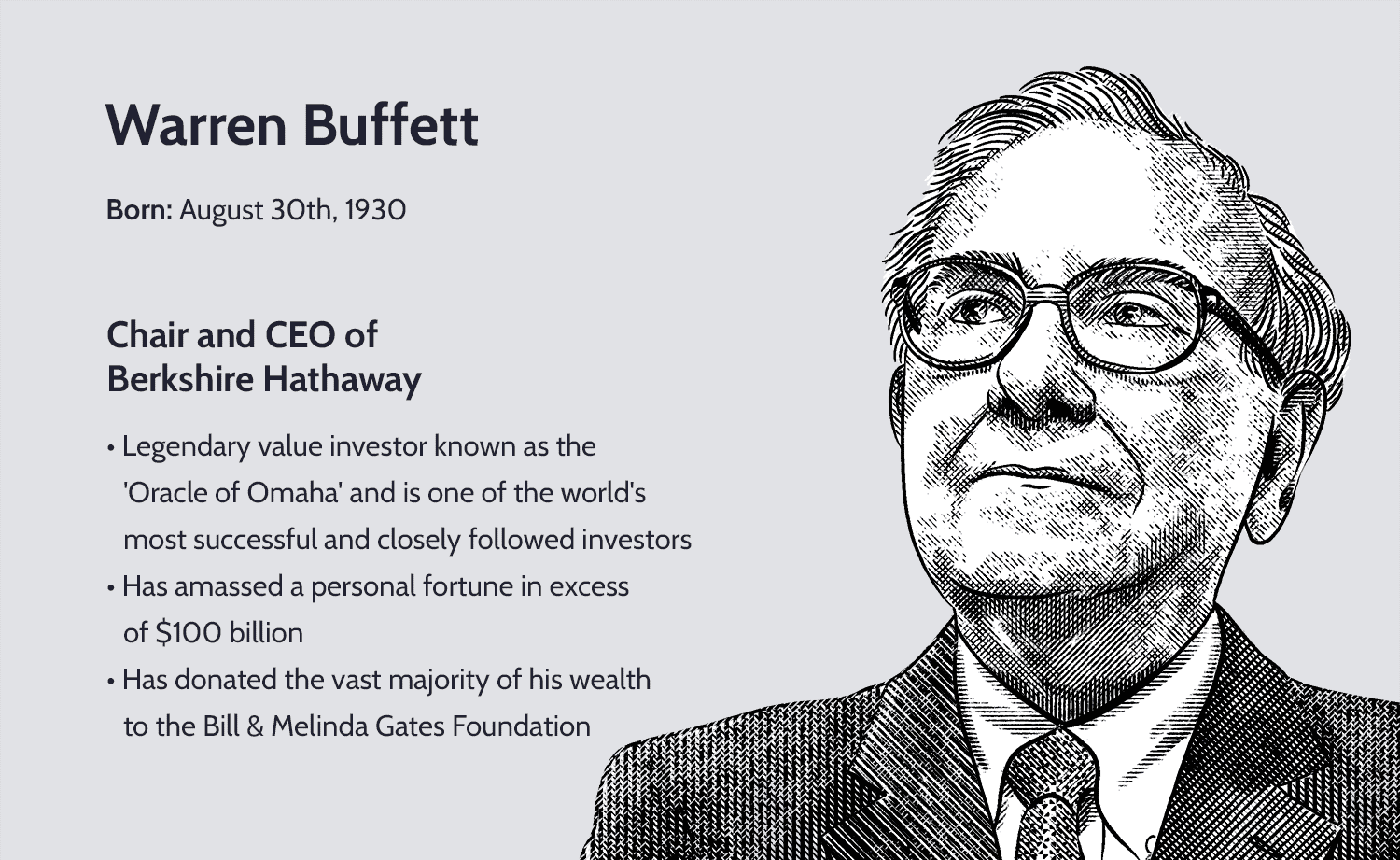
How would Warren Buffett evaluate this opportunity? What risk would Ray Dalio see that I had missed? What would Peter Thiel question? How would Tony Elumelu think about it in the context of building businesses in Africa?
Not one perspective. Multiple independent perspectives.
Brenxa is a decision intelligence platform that helps you think through important decisions using structured reasoning, proven frameworks, and diverse perspectives. It does not replace your judgment. It strengthens it.
The goal is not to tell you what to do. The goal is to help you reach a decision you can defend because you have genuinely thought it through.
Where to start
If you're facing an important decision right now, whether it's a business move, an investment, a hiring decision, or a strategic choice, try this before you commit.
Write down the decision you're leaning toward.
Then write down the three strongest arguments against it. Not weak objections. The strongest case you can make for why your decision might be wrong.
Finally, ask yourself: What would have to be true for those arguments to be correct?
That exercise alone will improve the quality of your thinking. It forces you to confront evidence you might otherwise ignore instead of simply reinforcing what you already believe.
The decisions you make over the next twelve months will shape far more than the next twelve months. They deserve more than instinct. They deserve more than confidence.
They deserve to be thought through.
One final thought.
Intelligence has never been the scarce resource. Good judgment is.
The people who consistently make better decisions are rarely the ones with the highest IQ. They are the ones with the best thinking process. They ask better questions. They challenge their own assumptions. They make room for disagreement. Most importantly, they understand that the cost of a bad decision is often far greater than the reward of a good one.